
The Disposable Website: Why Cheap Web Design Has a Short Lifespan
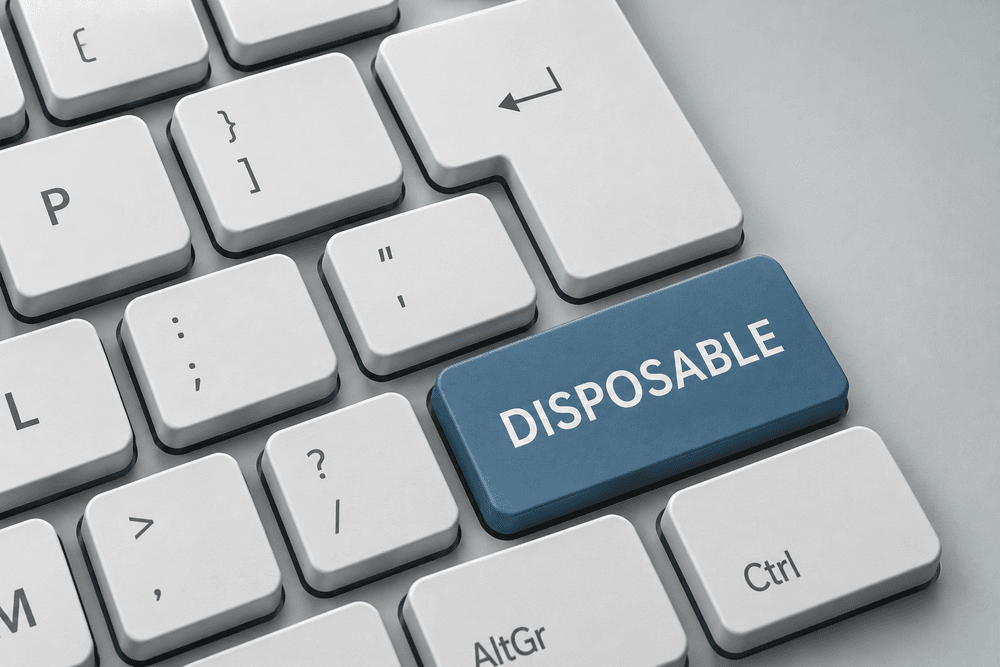
Have you ever purchased something knowing you wouldn’t keep it forever?
Disposable cameras. Paper plates. Temporary office space.
Websites can be disposable too.
That isn’t necessarily a criticism. In many cases, it’s a practical business decision. The problem is that most business owners don’t realize there are websites designed to last and websites designed simply to launch.
A disposable website is built for a short-term purpose. It gets a business online quickly, serves an immediate need, and is often replaced rather than expanded over time.
There is nothing inherently wrong with that approach—as long as everyone understands what is being purchased.
What Is a Disposable Website?
A disposable website is a website designed to solve today’s problem, not tomorrow’s.
It may be inexpensive, simple to launch, and perfectly adequate for a business that is still finding its footing. It typically emphasizes time to launch, convenience, and cost over flexibility and long-term growth.
Disposable websites often share a few characteristics:
- Limited functionality
- Minimal planning
- Little consideration for future expansion
- Built from a template that may be difficult to modify or expand
- Difficulty adapting as a business evolves
Again, none of these are necessarily bad things.
A startup validating an idea does not need the same website as a company that has been serving customers for twenty years.
The problem isn’t that disposable websites exist. The problem is that many businesses don’t realize they’re buying one.
| Feature | Disposable Website | Long Lasting Website |
| Primary Goal | Fast launch & minimal upfront cost | Scalable & built for long-term growth |
| Ideal Lifespan | 6 to 24 months | 5+ years (with updates) |
| Flexibility | Low (rigid templates, hard to expand) | High (strong foundation, easy to scale) |
| Best For | Startups, events, testing ideas | Established, growing businesses |
When Cheap Web Design Makes Sense
Cheap web design has its place.
In fact, there are situations where a disposable website may be the smartest financial decision a business can make.
Examples include:
- A startup testing a new business concept
- A seasonal business
- A one-time event or fundraiser
- A side business
- A temporary marketing campaign
- A company with an uncertain future
If your goal is simply to establish an online presence for the next year or two, there may be little reason to invest in a website built to support long-term growth.
A disposable website can provide exactly what is needed: a professional appearance, basic information, and a way for people to contact you.
For many businesses, that’s enough.
When Disposable Websites Become a Problem
Problems arise when established businesses expect disposable websites to function as long-term assets.
Imagine a business that has been operating successfully for five years. Over time, it adds new services, hires employees, expands into new markets, and invests in marketing.
Eventually, the website needs to keep pace.
That’s often when business owners discover the limitations of what they purchased.
Adding new functionality becomes difficult. Routine WordPress updates require workarounds and the website no longer reflects the business accurately. In some cases, rebuilding the website becomes easier than improving it.
At that point, the website is no longer supporting the business. Instead, the business is supporting the website.
A disposable website isn’t failing. It’s simply reaching the end of its intended lifespan.
Signs your current website has reached the expiration date:
- Simple text or layout updates require hiring a developer or using complex hacks.
- Connecting basic business tools (like your CRM, booking software, or email list) is impossible.
- Adding new services or pages breaks the navigation or mobile design.
- Your team avoids sending prospects to the site because it no longer reflects who you are.
The Expiration Date is Not on the Package
Every website has a lifespan.
Some are designed to evolve over a decade. Others are designed to get a business through its first few years.
Unfortunately, very few business owners are told which one they’re buying.
It’s common to hear, “We’ll add that later,” or “We can always redesign the website in a few years.” Sometimes that’s true. Other times, the website’s foundation makes future improvements difficult, expensive, or impractical.
Some websites are built to be improved.
Others are built to be replaced.
Understanding that distinction can save businesses significant time, money, and frustration down the road.
How Long Should Your Website Last?
The answer depends entirely on your goals.
If you’re launching a side project, a disposable website may be exactly what you need. There is no reason to invest in a long-term solution for a short-term problem.
However, established businesses should think differently.
If your website is expected to support marketing efforts, generate leads, communicate your value, and grow alongside your company, it should be a custom website designed and built with longevity in mind.
There is nothing wrong with cheap web design when the expectation matches the investment.
The important question isn’t, “How much does this website cost?”
It’s, “How long is it supposed to last?”
Before you sign off on your next web design project, don’t just ask for a quote. Ask what happens when your business outgrows your website. Their answer will tell you immediately which kind of website you’re buying.