
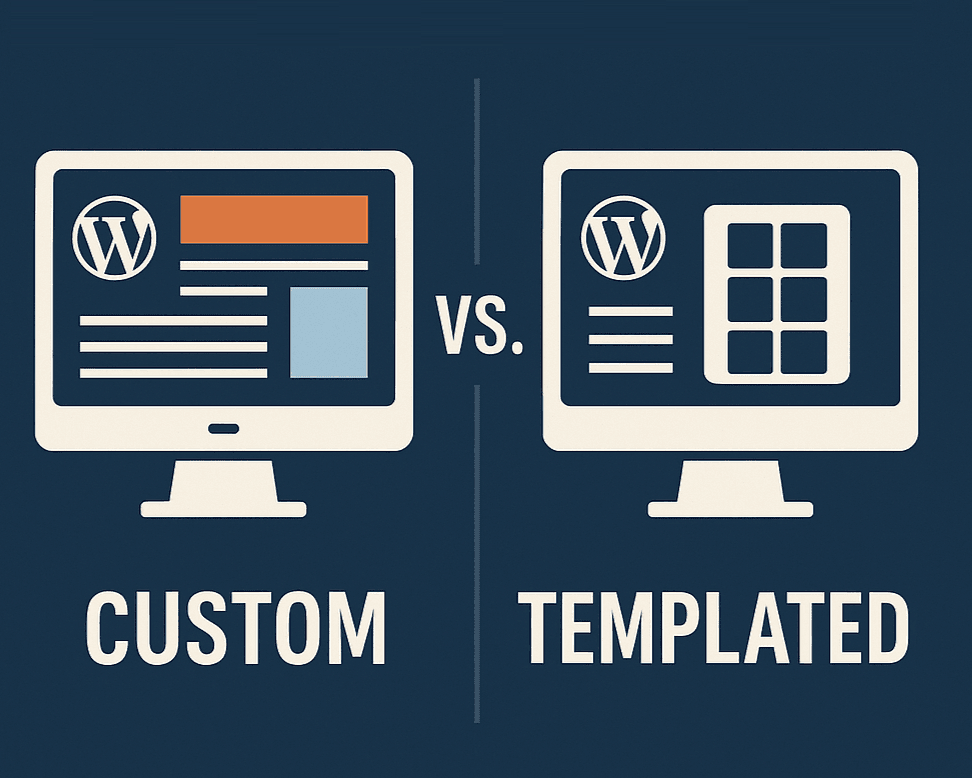
WordPress Websites: Custom vs. Templated Design
Why WordPress Remains the Leading Choice for Small Businesses
WordPress as a flexible and scalable platform
WordPress supports a wide range of needs. Small businesses use it for simple brochure-style websites. Professional firms depend on it for portfolios and content-heavy pages. B2B companies use it to present technical information and support sales workflows. Ecommerce businesses rely on it for product catalogs and checkout flows.
When built correctly, WordPress gives companies room to grow without the need for redesigns or switching platforms. For advanced projects, see our WordPress Development and WooCommerce Development services.
The appeal of WordPress themes and templates
Many owners start with a low-cost theme because it is fast to launch. Templates offer preset layouts, color schemes, and page designs. This works early on, but most companies outgrow these limits as their services expand or branding matures. Templates are built for general use, not the specific needs of your business.
How modern WordPress editing works
WordPress uses a block-based editing system called Gutenberg. It breaks content into small sections you can move and adjust, which makes editing more intuitive without technical knowledge. Because the block editor is built into WordPress, you can manage updates without relying on external page builders. Even with a custom design, the native editor lets you update text and images in a clean, consistent way.
What “Custom WordPress Design” Actually Means
Built around your brand and business goals
A custom WordPress site is designed specifically for your company. Instead of working within theme limits, your layouts reflect your brand, messaging, and customer journey. This approach avoids rigid theme structures and allows you to present information in a way that supports your goals.
Clean, lightweight WordPress development
Custom WordPress development prioritizes speed and stability. Clean code reduces unnecessary scripts, improves load times, and makes it easier for Google to understand your pages. Strong technical foundations also support ongoing Search Engine Optimization efforts.
Better long-term control and easier updates
A well-built custom site avoids layered builders and plugin-heavy designs. This creates predictable editing and reduces issues caused by bloated templates. Maintenance becomes simpler and updates are less risky, especially when supported by structured WordPress Maintenance and WordPress Support.
Understanding WordPress Templates and Page Builders
Popular WordPress page builders
Common page builders include:
- Elementor
- Divi
- WPBakery
- Beaver Builder
These tools provide drag-and-drop editing but rely on large frameworks.
Pros and cons of page builder-based design
Builders offer convenience and quick layout control. However, this convenience comes with tradeoffs. Page builders can slow down a site, introduce compatibility issues, and generate cluttered code. They can also make long-term maintenance more complicated.
When page builders make sense
Builder-based sites can be appropriate for:
- Basic starter websites
- Short-term marketing campaigns
- Temporary projects
- Budget-limited businesses
They provide a quick starting point but are not ideal for long-term growth.
Comparing Custom WordPress Development vs. Templated WordPress Sites
Performance and page speed differences
Templates and builders often load unnecessary scripts that slow down your site. Slow performance affects user experience and reduces conversion rates. Custom development removes clutter and delivers faster load times. Combined with reliable WordPress Hosting, performance remains consistent.
SEO considerations for each approach
Search engines respond well to clear structure. Clean development gives Google a direct path through your pages. Template-heavy sites often use duplicated layouts or outdated markup, which can affect rankings. Custom sites allow improved technical SEO and structured content planning.
Scalability and long-term maintenance
As your services expand, templates may restrict layout changes or require multiple plugins to add features—creating long-term WordPress maintenance challenges. Each plugin adds risk and technical overhead. A custom build grows with your business and supports new sections, integrations, and tools without redesigning the entire site.
Design limitations vs. full layout freedom
Templates limit design flexibility. You can adjust colors, fonts, or simple layouts, but deeper changes require workarounds. Custom design offers complete freedom to plan the user experience around your specific audience and goals.
The Risks of Over-Relying on Page Builder Templates
Compatibility issues after WordPress updates
Page builders operate on their own systems. When WordPress updates core files, these systems may break or require emergency fixes. This is one of the most common reasons site owners request WordPress Troubleshooting.
Plugin conflicts and technical debt
Builder-based themes often depend on multiple plugins. As you add more features, compatibility issues become more likely. This creates technical debt that grows over time and leads to unpredictable behavior.
Hidden long-term costs
Themes marketed as affordable can become costly. Fixing broken layouts, replacing unsupported builders, or completely rebuilding the site often costs more than a well-planned custom site.
When a Custom WordPress Website Is the Right Investment
Businesses ready to scale with a long-term platform
Custom development is ideal for companies planning long-term growth, including B2B firms, manufacturers, service businesses, and ecommerce stores. These companies benefit from stable performance and a strong development foundation.
Companies frustrated by outdated or slow WordPress templates
As layouts become outdated or the site slows down, rebuilding on a clean framework becomes the practical option. A custom site solves common issues such as slow load times, layout restrictions, and inconsistent editing experiences.
Owners who want long-term support and predictable performance
Businesses that invest in ongoing care benefit from clear maintenance workflows, stable updates, and reduced downtime. Structured WordPress Maintenance keeps your site running smoothly and is less costly with a solid build.
Choosing the Best WordPress Approach for Your Business
Start with goals, not tools
The platform should support your business objectives. Define what you need the site to accomplish before choosing tools or templates.
How to evaluate your current WordPress site
Begin with a simple review:
- Does the site load quickly?
- Is editing consistent across pages?
- How many plugins are installed?
- Is anything tied to an outdated builder?
- Are you limited by your current theme?
These signs help determine whether a custom rebuild is beneficial.
Why WordPress built professionally outperforms DIY approaches
Professional development provides a clean foundation, stronger SEO structure, and reliable performance. It removes guesswork and avoids problems caused by inconsistent design practices.
Get the Most Out of WordPress
Custom WordPress design provides long-term freedom
A custom build gives you a website built for your brand, your goals, and your future. It avoids the limits of templates and supports ongoing improvements.
Templates and builders have a place—but with limitations
They serve early-stage needs or small projects but are not the right choice for businesses planning to grow.
Professional WordPress development ensures performance and reliability
A well-built WordPress website delivers clarity, stability, and room to expand. To explore your options, view our WordPress Development services.