
Comparing Website Proposals: What Actually Matters?
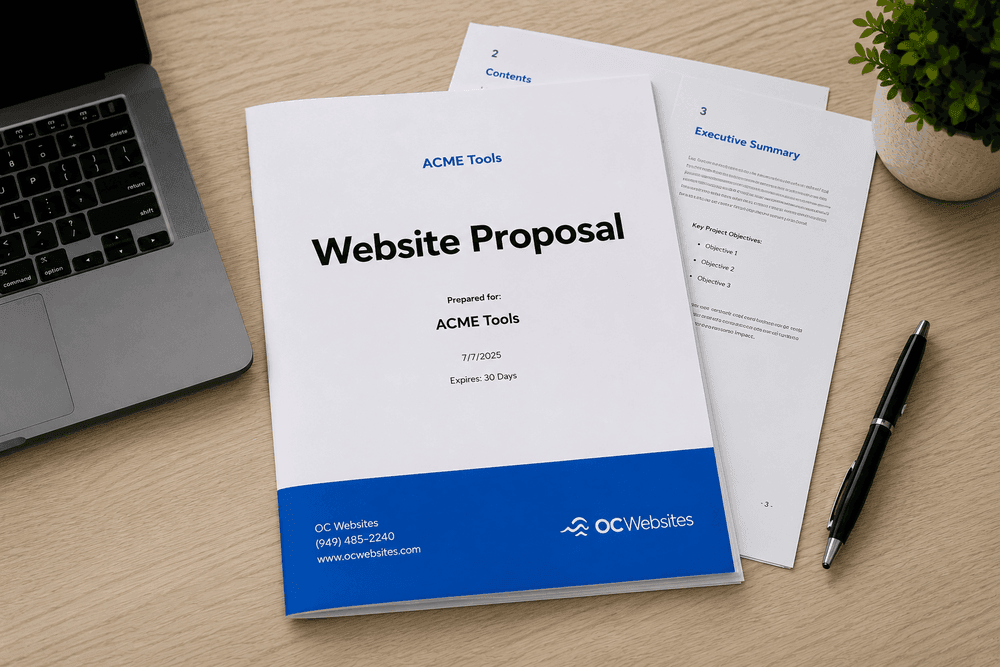
Website proposals for the exact same project in Orange County can vary by thousands of dollars. One local provider quotes a few thousand, while another might demand quadruple that amount for what appears to be the identical number of pages and features.
This leaves busy Southern California business owners wondering what they are actually paying for.
The reality is that website proposals frequently contain vastly different assumptions, deliverables, and levels of service. Before you compare the bottom-line price, you need to understand exactly what each provider is—and isn’t—promising to deliver.
Why Website Proposals Can Look So Different
Websites are not a standardized commodity. Two companies can build sites that look identical on the surface while taking completely different approaches behind the scenes.
One proposal may focus strictly on aesthetics, another on advanced backend functionality, and a third on long-term support. Furthermore, freelancers, mid-sized website companies, and large corporate agencies all operate under entirely different cost structures and operational assumptions.
Similar-looking websites can be built in completely different ways. That is why comparing price alone never gives you the full picture.
Compare Scope Before Comparing Price
One of the primary drivers of price variance in website proposals is project scope. Two bids may look identical on the surface, but a deeper look at the deliverables reveals why one costs substantially more than the other.
When evaluating a web development project, look for specific details across these six core areas:
- Website Architecture & Code Quality: Proposals rarely specify how a site is built, yet this heavily dictates price. Lower bids often rely on heavy, pre-made themes and third-party page builders that clog the site with bloated code. Higher-end WordPress development focuses on lean, clean code using the native WordPress editor. While cleaner code requires a higher upfront investment, it ensures long-term stability, faster page speeds, and a backend that won’t break during future core updates.
- Web Development & Functionality: Basic informational sites require less backend coding. If your business needs advanced functionalities—such as user accounts, secure client portals, custom calculators, or booking engines—the development complexity and cost increase significantly.
- Ecommerce Solutions & Architecture: WooCommerce development and online stores vary wildly in scope. A low-cost bid usually covers a basic storefront. A comprehensive proposal accounts for product variations, complex shipping rules, inventory sync, tax configurations, gated wholesale pricing, and secure payment gateways.
- Third-Party Integrations: Connecting your website to external systems requires precise technical setup. Ensure your proposal explicitly accounts for integrations with your CRM, email marketing platforms, accounting software, scheduling applications, or ERP systems.
- Content Migration: Moving legacy data from an old site to a new one is highly labor-intensive. If you have dozens of blog posts, portfolio items, or product pages, verify whether the agency is migrating this data or if they expect your team to copy and paste it manually.
- Quality Assurance & Testing: A robust deployment process includes cross-browser testing, mobile optimization, form validation, security audits, and page-speed performance tuning. Lower-priced proposals often skip thorough QA, leaving the testing to you after the site goes live.
Compare What Happens After Launch
Many business owners focus entirely on getting the website built. However, what happens after launch can have a significant impact on long-term success. A website’s long-term value often depends on factors that are not immediately visible during the proposal process. For a deeper look at these considerations, see our article on What It Means to Build a Website That Lasts.
When reviewing proposals, look closely at how each provider handles the post-launch phase:
- Hosting Environment: Determine whether hosting is included, optional, or managed separately. A small brochure-style website may not need a complex hosting setup, but larger sites, ecommerce stores, membership sites, or high-traffic websites may require hosting that is matched to the site’s traffic, database activity, security needs, and performance requirements.
- Ongoing Maintenance: WordPress sites require regular maintenance to stay secure. Verify if the proposal includes software updates, daily backups, and security monitoring, or if they expect you to click “update” and manage the risk of things breaking yourself.
- Technical Support: Support arrangements vary considerably. Some providers consider the job done the second the site goes live, charging high hourly rates for minor fixes later. Look for clear definitions on response times and how post-launch bugs or questions are handled.
- Ownership & Access: A website should be a business asset you clearly control. Make sure the proposal explains what you own after launch, what access you receive, and whether the site can be moved or maintained by another qualified provider if needed. Simple ownership terms are often more important than broad promises about support.
- Future Updates & Local Support: Your business will change, and your website will need updates over time. Ask whether the provider handles future changes, how those updates are billed, and whether they have a reliable reputation for supporting clients after launch. For many small businesses, working with a local provider in Orange County can also make future communication easier.
Look for Hidden Assumptions
Many discrepancies in website proposal pricing come down to assumptions that are never openly discussed. These hidden details can quietly derail your budget and timeline after you sign the contract.
Bottom line: if it is not explicitly written down in the proposal, assume it is likely not included.
When reviewing a bid, ask the provider to clarify these common assumptions:
- Review Cycles & Revisions: Most professional proposals include a specific number of design and development review rounds. Be highly skeptical of companies promising “unlimited revisions”—this marketing puffery is almost always offset by hidden fine print, rigid timelines, or launch delays.
- Third-Party Licensing Fees: A website often requires premium software, security tools, and plugin subscriptions to run correctly. Verify whether these ongoing licensing costs are baked into the proposal or if you will be surprised by separate, recurring bills after launch.
- Content Readiness: Most website proposals assume the client will provide core business information, photos, approvals, and at least some content direction. That is normal. The important question is how much help is included if your content is incomplete, unorganized, or still being revised. If writing, editing, image sourcing, or content cleanup is needed, confirm whether that work is included or billed separately. Unclear content responsibilities and approval timelines are also common reasons website projects get delayed.
- Project Timelines: Timelines can vary significantly between website proposals. Some schedules assume immediate feedback, finalized content, fast internal approvals, and minimal revision cycles. Others account for design reviews, team input, content gathering, scheduling conflicts, and the realities of day-to-day business operations. Compare whether each timeline is truly realistic and reflects the actual pace of your business, not just the fastest possible path to launch.
- Ecommerce Realities: Building a storefront for ten simple items is entirely different from engineering a site with hundreds of products, multi-carrier shipping logic, and variable attributes. Ensure the proposal accounts for the exact complexity of your inventory, not just a generic “online store.”
- The Condition of Your Current Site: Replacing an old website isn’t always a clean slate. Outdated systems, messy legacy code, broken databases, or unmapped URLs require significant diagnostic work to migrate safely without destroying your existing Google rankings. Make sure the proposal accounts for the actual state of your current digital footprint.
Many website problems originate from decisions made years earlier during development. Our article on Why Some WordPress Websites Run Into More Problems Than Others explores how technical decisions can affect long-term maintenance and reliability.
Questions to Ask Before Choosing a Proposal
Before selecting a provider, cut through the sales pitch by asking these direct questions. Their answers will instantly reveal whether you are dealing with a professional company or one relying on puffery.
- What exactly is included in the proposal?
- Is the agreed-upon work, pricing, timeline, and terms clear and easy to understand?
- What is not included?
- How much of the proposal is dedicated to explaining the actual work versus selling the company?
- Who is responsible for providing content, images, and approvals?
- What happens if our content is not ready on time?
- How many revision rounds are included?
- What assumptions does the proposed timeline depend on?
- Who owns the website after launch?
- Will we receive full access to the website after launch?
- Is hosting included, who manages it, and is it appropriate for the size and complexity of the website?
- Are backups, security updates, and ongoing maintenance included?
- What happens if something breaks after launch?
- Are redirects from the old website included?
- Are there software, plugin, or third-party costs not included in the proposal?
- How are future updates handled?
- Who will provide support after launch?
- What could cause the final cost or timeline to change?
Conclusion
When reviewing website proposals, price is only one piece of the decision.
Two proposals may appear similar while including very different scopes, responsibilities, assumptions, and long-term support arrangements.
Rather than focusing solely on cost, take the time to compare what is actually being delivered, who is responsible for each part of the project, what assumptions are being made, and how the website will be supported after launch. Whether you’re evaluating a custom website or a more standardized solution, understanding these details will help you make a more informed decision.
A well-informed comparison helps ensure that the proposal you choose aligns with your business goals, expectations, and long-term needs.