Website Project Insights: Lessons From Professional Services Websites

Professional services team meeting in a modern office environment

Professional services organizations in Orange County often need websites to do something different than companies that sell products online.

Prospective clients are not usually making immediate purchasing decisions. Instead, they are assessing expertise, credibility, professionalism, and whether they feel confident starting a conversation.

After working on website projects for law firms, consultants, psychologists, and other professional service organizations, certain patterns have emerged. While every project is unique, the websites that perform best over time tend to share several common characteristics.

These are some of the key insights we’ve gained from professional services website projects.

Trust Is Often Built Before Visitors Read the Content

Many organizations focus heavily on messaging, but visitors frequently form impressions before reading more than a few sentences.

Navigation, page structure, imagery, typography, and overall presentation all contribute to how a business is perceived. When information is difficult to find or the website feels disorganized, visitors may question the professionalism of the organization itself.

Conversely, when information is clearly organized and easy to navigate, visitors are more likely to continue exploring the website and engaging with its content.

One of the most consistent lessons from professional services projects is that trust often begins with clarity.

Every Industry Has Different Expectations

Professional services is a broad category that includes many different types of organizations.

A law firm website serves a different audience than a psychologist’s website. A consultant’s website communicates differently than an accounting firm’s website. Each industry has its own expectations regarding content, structure, tone, and presentation.

The strongest projects are usually those that align with the expectations of their intended audience rather than following generic website trends.

Successful websites often feel familiar and intuitive to prospective clients because they present information in ways that match industry expectations.

Organization Matters More as Websites Grow

Many professional services websites begin with a relatively small number of pages.

Over time, however, businesses add services, team members, articles, resources, FAQs, case studies, and location-specific content. What starts as a simple website can become significantly more complex.

Without a clear organizational structure, growth can create navigation issues, duplicate content, and a frustrating user experience.

One insight that consistently emerges across projects is that thoughtful organization often becomes more valuable than visual design as websites mature. Strong page hierarchies, logical navigation systems, and consistent content structures make future growth easier to manage.

Project Insight: Troutman Amin, LLP

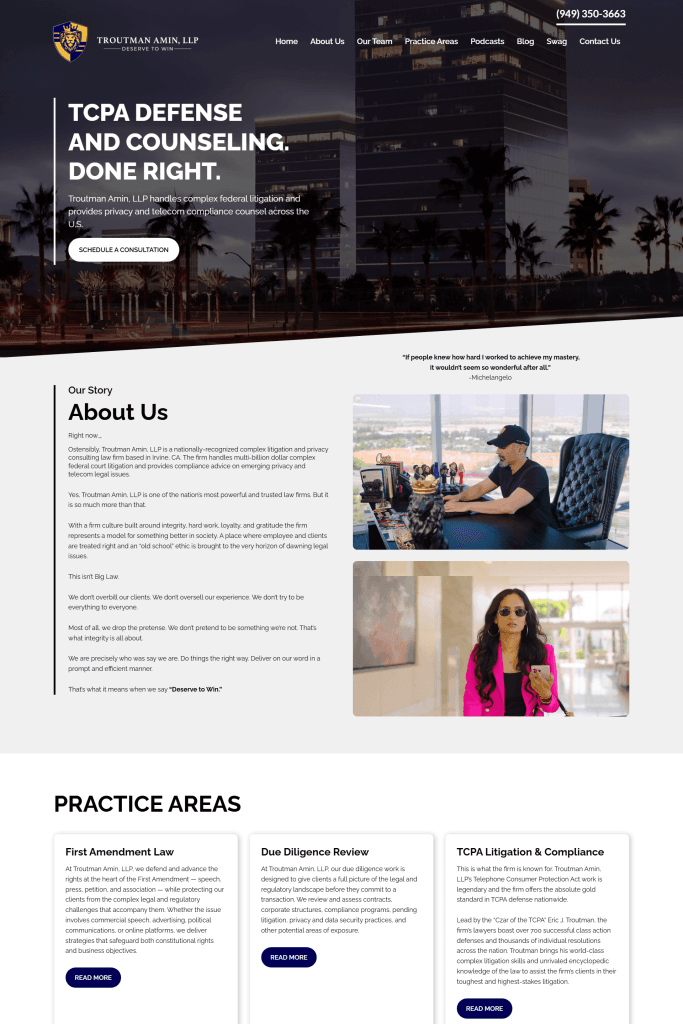
Troutman Amin, LLP needed a website that could support a highly visible legal brand, not just a traditional attorney website. The firm’s online presence includes detailed practice area content, attorney profiles, media-driven messaging, podcasts, blog content, and frequent use of video backgrounds.

We developed a WordPress website that balances strong visual presentation with organized legal content. The site gives the firm room to communicate its public-facing personality while still helping visitors find practice areas, attorney information, and related resources clearly.

View the Troutman Amin project

Project Insight: Dr. Mary Eason

Our work with Dr. Mary Eason required a different approach.

The website needed to communicate professionalism while creating a welcoming and approachable experience for prospective patients.

A major insight from this project was that simplicity often requires careful planning. Clear navigation, focused content pathways, and thoughtful page organization helped create a user experience that feels calm and easy to navigate.

The result demonstrates how website structure can support both credibility and accessibility.

View the Dr. Mary Eason project

Project Insight: Adhesion Sciences

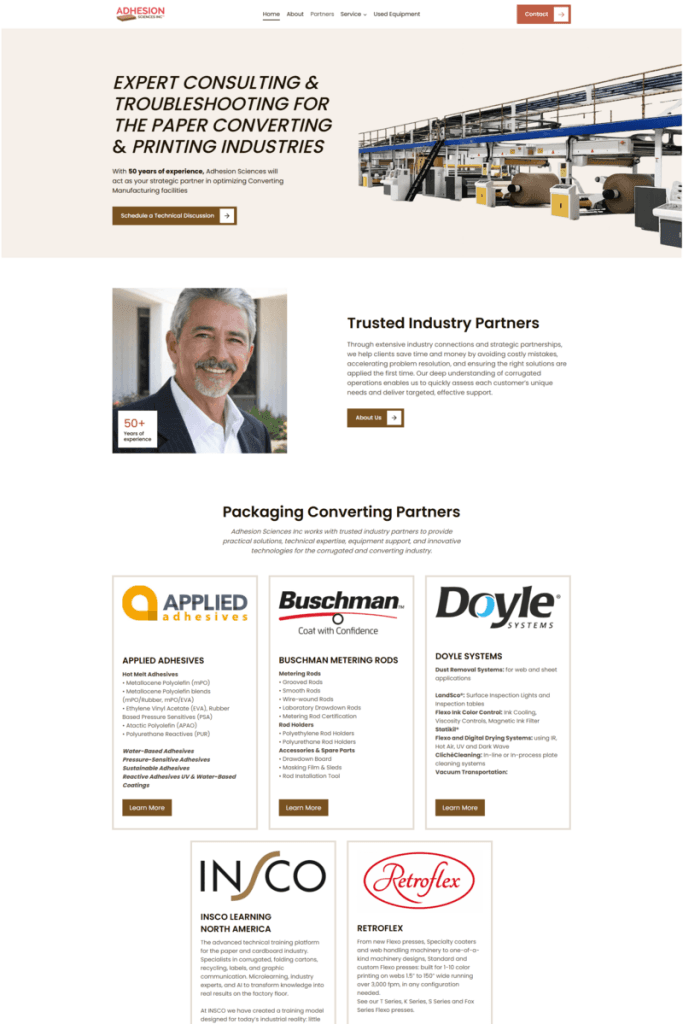
Adhesion Sciences needed a website that better reflected its consulting, troubleshooting, and project management expertise for manufacturers in the paper, film, plastic, converting, and printing industries.

The project focused on clarifying service offerings, separating consulting from equipment-related content, and creating a more professional structure for future growth.

The project reinforced one of the key lessons from professional services website projects: specialized expertise needs to be organized clearly so technical audiences can quickly understand the value being offered.

View the Adhesion Sciences project

Long-Term Flexibility Often Matters More Than Launch Day

Many website discussions focus on launch-day deliverables, but long-term flexibility often has a greater impact on overall value.

Professional services organizations evolve over time. New services are introduced, staff changes occur, and content requirements expand. Websites that are difficult to update can become obstacles rather than assets.

Projects that perform well years after launch are typically built with future growth in mind. Flexible content structures, manageable editing tools, and scalable organization help businesses adapt without requiring major redevelopment.

The ability to evolve efficiently is often more important than adding every possible feature during the initial launch.

Expertise Needs to Be Demonstrated, Not Claimed

Professional services organizations often rely on experience, credentials, and specialized knowledge to differentiate themselves.

However, simply stating expertise is not enough. Each organization needs to show credibility in a way that fits its work, audience, and decision-making process. For one firm, that may mean detailed service pages and attorney profiles. For another, it may mean educational articles, case examples, credentials, publications, testimonials, or a clearer explanation of its approach. The right proof depends on what prospective clients need to see before they feel comfortable reaching out.

One lesson that consistently emerges from professional services projects is that credibility is often reinforced by evidence. The strongest websites help visitors understand not only what an organization does, but why it is qualified to do it.

Final Thoughts

Every professional services organization is different, but successful website projects tend to follow similar principles.

Trust, organization, usability, and long-term flexibility consistently have a greater impact than visual design alone.

While design remains important, the most effective professional services websites are usually those that help visitors quickly understand who the organization is, what it does, and why it can be trusted.

Those lessons continue to shape how we approach professional services website projects today.

Learn more about our Professional Services website design experience.